Friday, September 9, 2022

Flower Friday: September 9, 2022

Happy Flower Friday!

How is your garden growing?


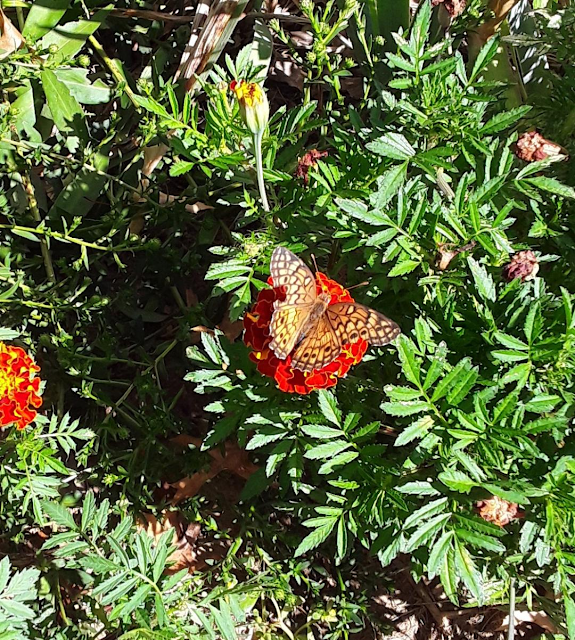
Alice sent this lovely photo of a butterfly enjoying her marigolds!
Alice said she has been studying about marigolds and apparently the flowers do repel certain pests from attacking tomato plants.  She just wishes the marigolds would repel the squirrels from running off with her tomatoes!  😂  I can relate Alice!!


We got rain this past week and of course it makes a huge difference.  The plants had pretty much gone dormant.  Almost overnight, we had buds and then blooms on our clematis and roses:


That's it for this week!
Have a safe and happy weekend!


Thursday, September 8, 2022

Marigold Quilt Pattern

 Happy Wednesday!

I don't know about you but sometimes when I am working in the garden, I wonder if there is a quilt pattern to all the lovely flowers I see.  

Most of us gardeners have or had marigolds in our garden.  One writer called the marigold, "the flower of summer".

This year, I had challenges with marigolds.  I bought some white marigolds at my local nursery.  Unhappily, the plants had some kind of blight.  The leaves became spotted and they all died.  I've read that there is a blight called altermaria that can impact marigolds and clearly I had that.  My neighbor down the street said she had planted zinnias and marigolds but only 2 of her marigolds germinated and they didn't last long either.  Happily, it doesn't seem to be a neighborhood trend, many of my neighbors had successfully cultivated the golden and orange blooms.

As popular as the marigold is in the garden, I wondered if there was a quilt pattern that celebrated the flowers.  Surprisingly, I only found 2!  Yes there were embroidery patterns...but applique or pieced--just 2.  Both were marketed by Nancy Cabot at the Chicago Tribune.

This pattern was offered in 1937.  It doesn't resemble a marigold that much.  I think all the petals on the flower might have been daunting.


A year later, "Marigolds" was offered by the paper and even though it doesn't look much like a marigold, I think it is cute pattern:


What do you think about these patterns?  How did your marigolds do this summer?  If you would like to share what is going on in your garden, please email photos to allentownquilter@gmail.com

Have a safe and happy day!

Wednesday, September 7, 2022

Superstition about Black Fabric

 Yesterday I was reading about Nancy Cabot and looked through a number of her patterns.   It's astounding but she usually featured a quilt pattern a day, although she had helpers.  A good bio on her is here and here.

But I don't want to talk about Nancy as much as I want to talk about quilts and myths.  

Most of you realize there were no "Underground Railroad" quilts. Many of you realize that no quilter purposely made a mistake on her quilt as a "humility block."  These are just a few of the myths that haunt our craft.

In July of 1938, a myth I had never heard was relayed by Nancy Cabot.

"There was a superstition among the ancient quiltmakers that black, included in a coverlet, was not to be taken as a good omen, and no one ever dared consider it with other colors."  She then goes on to write that the designer of this pattern chose to defy the odds by using black, yellow and blue in this quilt:


Well I'm here to tell you that black cotton fabric wasn't incorporated into many antique quilts because the black dye wasn't colorfast until the 1890s.  

Black silk was colorfast and used in crazy quilts:

Also used in other quilts of the era like fan quilts:

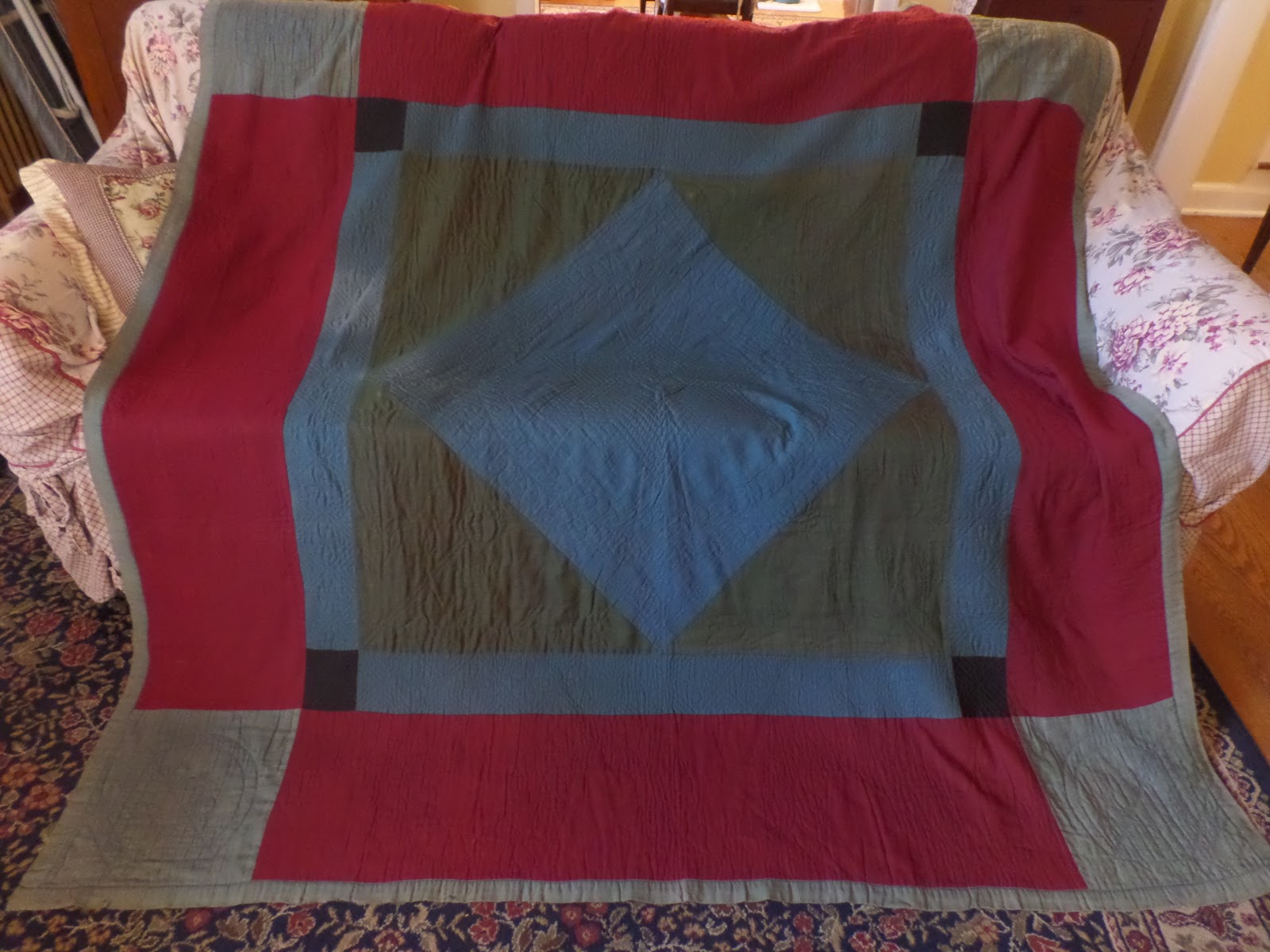
Amish wool quilts also used black like the cornerstones here:

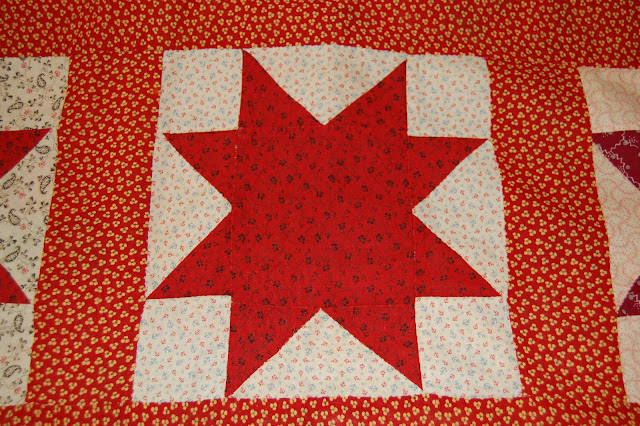
Once black dye was colorfast it was incorporated into many fabrics and used by quiltmakers often.  One way we can tell a quilt is from 1890 on is if the fabric has any black in it like this (possibly Garibaldi) print (red with black)...


Circa 1890 quilt top 

Or what we now refer to as neon prints that became so popular in the later 1890s (a good article is here by Barbara Brackman):

The black fabric with blue flowers is what we now refer to as a "neon":

Fortunately this myth never became very popular.

I'm not sure where this idea came from or if it was just a marketing ploy to sell the pattern.  Certainly most 1930s quilters were more interested in the clear colors and pastels during this era.  Those colors certainly were uplifting during the Depression plus the technology to make the colors was still relatively new (another post to be written).

Wishing you a safe and happy day!


Tuesday, September 6, 2022

Tuesday's This and That: September 6, 2022

 Happy Tuesday!

I hope you had a wonderful Labor Day weekend!  To me, the holiday always seems to be like a new chapter.  Autumn is approaching and my focus is gradually shifting from the garden to winter sewing projects.  

Yesterday I finished up many summer projects.  The 55 "little ghosts" are done; my mother's placemats are done (all 15); and I finished a baby quilt for a friend's granddaughter.


Little ghost quilts for our kids and a local library that is featuring the book, The Little Ghost Who Was a Quilt.  The kids can draw their own face in the little quilt.


Mom wanted reversible placemats for the kids so I whipped up these with some scraps and bought the little ghost appliques at Etsy.  They are all finished but I didn't take a photo of it.  I was just glad to be done with them.

The baby quilt I finished last night.  But it's so dark that I can't get a decent photo of it.  So that will wait for another day.

Happily, the "scrap summer" is over but I've made a sizeable dent.  I had two deep drawers of scraps that are now condensed to one drawer.  I even have one smaller empty drawer.


So what's next for me?  Well  "the owl and the pussycat" project.  Actually these are two separate quilts.  The Owl quilt is for an invalid neighbor who loves owls and bright colors.  That fabric is already cut up and ready to assemble.  

The pussycat or Cat quilt is for 10 year old Mr. Brett.  He is one of the oldest kids in the our family and is well outnumbered by girls in his family. 

Brett confided to me this summer as he petted our dogs, "dogs are fine.  But I like cats better.  When I grow up,  I'm not going to get married but live in a house with cats...lots of cats!" 
😂😂😂

Are you looking forward to winter projects?  What's on your list to get done the next few months?

Have a safe and happy day!


Friday, September 2, 2022

Flower Friday: September 2, 2022

 Happy Flower Friday!

Alice sent a photo of her dahlia, flanked by marigolds.  Alice thinks that marigolds get brighter this time of year and I agree with her! Isn't this grand!!!

💥💥💥

Lorraine shared a number of photos from her garden!

Nicotiana "Peace pipes"--such a pretty form to this flower!

Zinnias!

Dahlias!

Morning Glory:

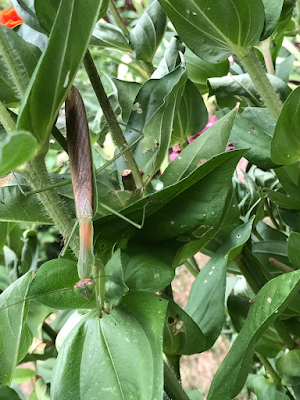
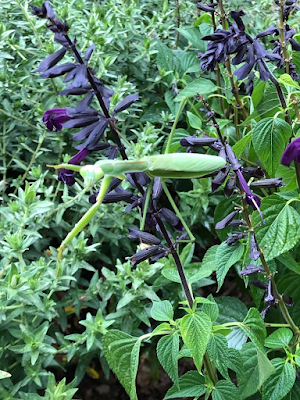
And Praying Mantis 😀😀


Thank you Alice and Lorraine for the great photos!

Have a safe and happy weekend!

Thursday, September 1, 2022

Peachy Keen

 Happy Thursday!

Early 20th century postcard

My husband said that he heard our local peach crop had failed.  I haven't been able to verify that anywhere.  On the other hand, we had late freezes in spring and a drought through the end of July and most of August so it wouldn't surprise me that the prices of the fruit might be high.

I'm not particularly fond of the color orange (it's my least favorite color) but I do have two quilts that I like that feature some peach.

I do have two quilts with some peach tones to them that I like:


This is a Kansas Trouble quilt I bought years ago.  I like the soft peach that alternates the blocks.


I have absolutely no idea when this quilt was made.  I've often guessed circa 1940.  

Perhaps the best clue is another quilt that features this peach--on the backing of the quilt:


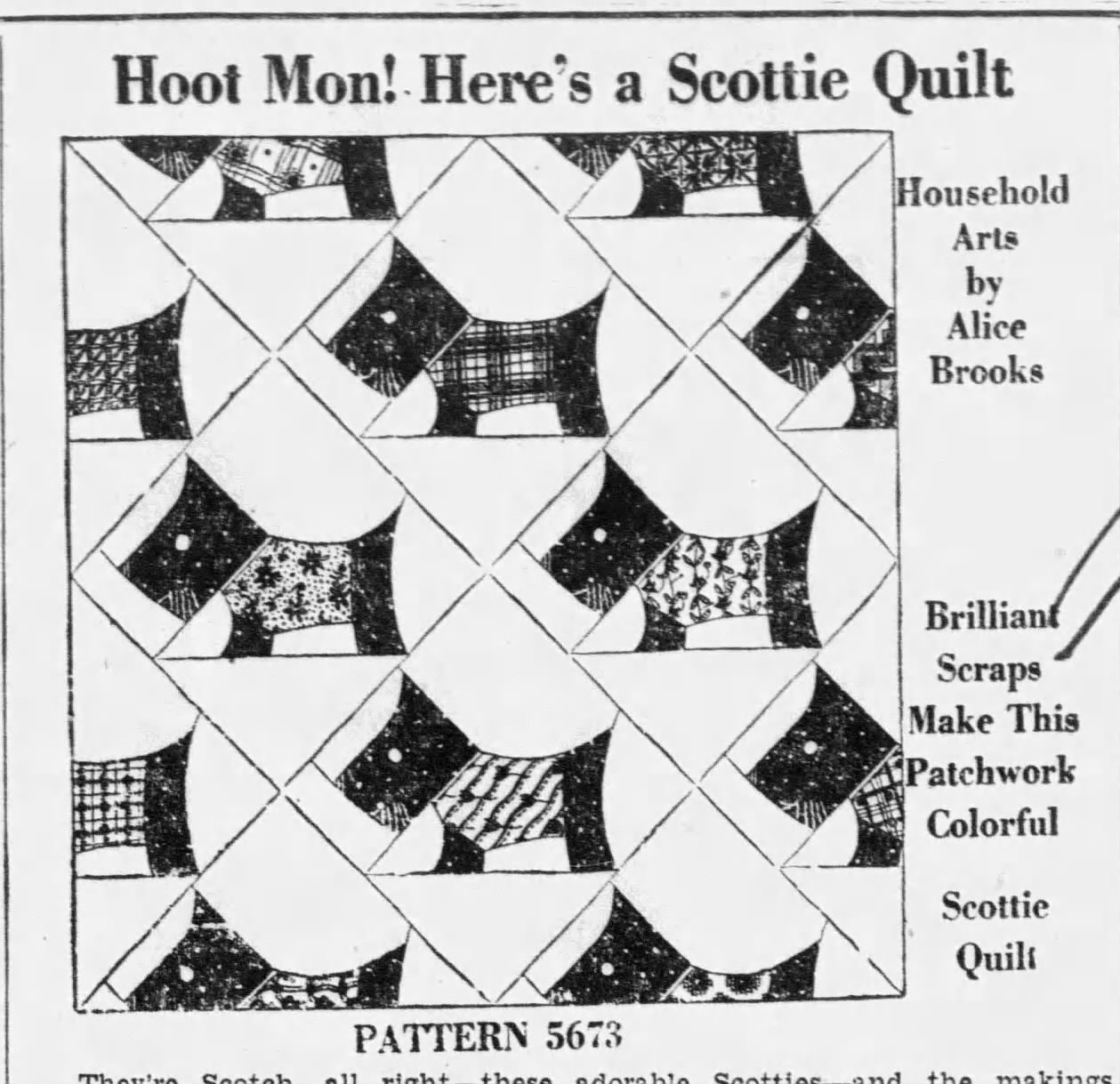
The backing is folded over to form the binding.  Perhaps this quilt is the best clue as to when the Kansas Troubles Quilt was made.  The Scottie Quilt pattern was widely published in 1937:

As I mentioned, I like the more muted tone of this peach.  It reminds me of a color that was favored by Victorians and early 20th century decor:  Ashes of Roses.  I became fascinated with this color after I read The Thorn Birds.  I mused that this peach might be "ashes of peaches" and then that started a whole new train of thought...

Did you know...that during World War 1 peach pits helped save the troops?  I kid you not!  As we all know, many soldiers died from chemical warfare.  One thing that could save the soldiers was a gas mask.  The only problem was that the wood charcoal first used for the filter of the mask had a limited time period and was not as effective as... peach pit charcoal.  Through World War 1, the country saved all the peach pits (and some other fruit stones but peaches were the best) to donate for the men's masks.


Not a landfill above, but a peach pit repository!

After the war, peach pits were no longer collected, but they did help to save our soldiers lives!


Tomorrow is Flower Friday and if you have any images to share, please email me at allentownquilter@gmail.com!

Have a safe and happy day!